
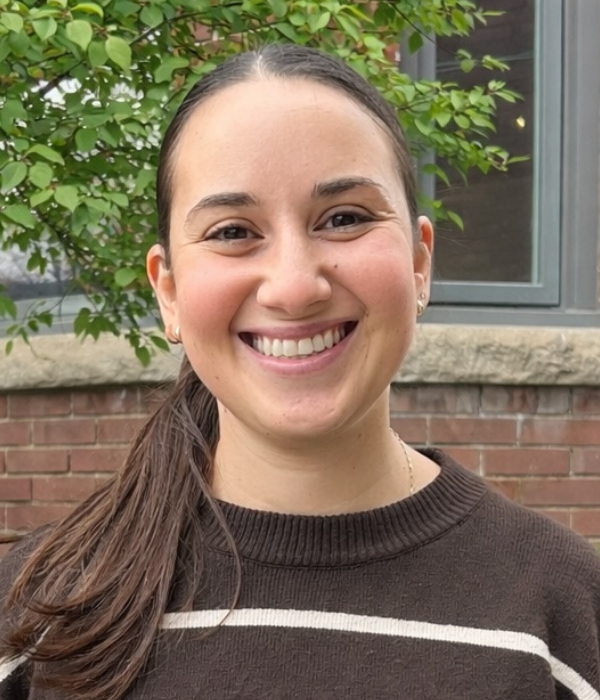
Ashley Siegel (she/her) is currently completing her Ph.D. in Clinical Psychology at York University. Her past research has focused on couple interventions for post-traumatic stress disorder and borderline personality disorder. In her doctoral research, she is studying the psychological impacts of mattering (feeling valued) and anti-mattering (feeling invisible) on adolescent and young adults’ mental health, with a particular focus on suicidality.
Ashley has extensive training in Dialectical Behavioural Therapy (DBT), Cognitive-Behavioural Therapy (CBT), and Motivational Interviewing (MI). She is continuing to develop her knowledge and skills in Acceptance and Commitment Therapy (ACT) and Compassion-Focused therapy (CFT). Her clinical work emphasizes emotion regulation, cognitive flexibility, and developing a sense of meaning and values in one’s life. She takes a collaborative, client-centred approach, tailoring treatment to each individual’s goals, values, and lived experiences. Ashley strives to create a non-judgmental, honest, and compassionate therapeutic space where clients can better understand the interplay between their thoughts, emotions, behaviours, and environments, and build practical skills to support meaningful and sustainable change.
Ashley has received clinical training at the York University Psychology Clinic, the Anxiety Treatment and Research Centre at St. Joseph’s Healthcare Hamilton, and Dr. Gayle Goldstein and Associates. She is currently completing a placement at the Centre for Addiction and Mental Health (CAMH) in the Therapeutic Neighbourhood, where she works with inpatient clients both within and outside the forensic system, with a focus on psychosis and emotion regulation. Ashley has worked with individuals across the lifespan from diverse social backgrounds and with complex mental health concerns.
Ashley has provided assessment and therapy for individuals experiencing depression, anxiety, post-traumatic stress disorder, borderline personality disorder, schizophrenia, bipolar disorder, and obsessive-compulsive disorder, as well as concerns related to relationships, grief, identity, and life transitions. She also has extensive experience working with neurodivergent individuals, including those with ADHD and Autism, and takes a neurodivergent-affirming approach to care.
Outside of her clinical work, Ashley enjoys reading, exercising, and spending time with her family, friends, and her Australian Shepherds.